After exploring the dimensions of governance, operational structure, acquisitions, leadership agility, risk, culture, and executive power, we arrive at a summary of this series: integration. In Part 9, I draw these insights together into a comprehensive, systems-based roadmap for sustainable growth.
This is not a checklist. It is a dynamic, cyclical framework designed to guide leadership teams through the evolving challenges of corporate development. It is adaptable, iterative, and deeply rooted in the principles of system viability, cultural coherence, and strategic foresight.
The Corporate Growth Continuum: A Unified Framework
Sustainable growth requires simultaneous alignment across six critical domains:
- Governance Discipline
Governance is not a constraint. It is the architecture that supports entrepreneurial freedom without chaos. Viable Systems Modeling ensures clarity of purpose, accountability, and role alignment. Leaders must regularly audit governance structures to ensure relevance as the organisation scales. - Operational Coherence
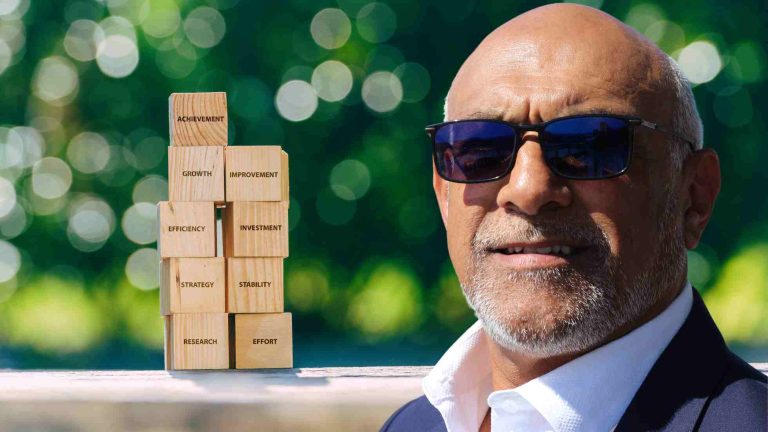
Growth exposes operational fragmentation. Scalability depends on integrated processes, technological enablement, and real-time visibility across functions. Efficiency is not about cost-cutting; it is about clarity, flow, and value delivery. - Strategic Agility
Organisations must shift from static planning to adaptive strategy. Leadership agility, innovation capacity, and rapid decision loops are crucial in navigating transitions. Interactive Planning methods allow for continual recalibration in response to feedback and market shifts. - Risk as Strategy
Risk management must be embedded in strategy formulation, not bolted on after. Resilient organisations decentralise risk ownership, empower escalation, and use foresight to anticipate disruption. Risk becomes a source of competitive advantage when integrated into decision-making. - Culture as Execution Engine
Culture is where strategy either thrives or fails. It is shaped by leadership behaviour, reinforced by rituals and systems, and sustained through trust. The transition from founder-centric to enterprise-wide accountability hinges on cultural clarity and mutual respect. - Trust as Organisational Currency
Sustainable growth demands mutual trust and respect across executive leadership and all stakeholder interfaces. This is not a soft ideal, it is a hard requirement for alignment, delegation, and execution at scale. Trust accelerates decision-making, reduces friction, and builds reputational capital. Without it, governance collapses into bureaucracy and culture fractures under pressure, hence the importance of Mutual Trust and Respect.
Systemic Integration: Leadership’s Ultimate Task
The real challenge is not in excelling at any one domain, but in aligning them. Systems thinking teaches us that fragmentation leads to failure, even when individual components appear strong. Leaders must constantly zoom out to ensure harmony across strategy, structure, and behaviour.
Executive teams should establish periodic strategy resets-not just to refresh goals, but to review system alignment. When growth stalls or complexity spikes, the root cause is often a disconnect between what is being measured, how decisions are made, and what behaviours are being reinforced.
The Leadership Maturity Curve
A consistent theme in this series has been the need to evolve leadership models. From founder-led intensity to distributed strategic leadership, the organisation must mature in its command structure, decision rights, and collaborative ethos.
Mature leadership is not about hierarchy. It is about accountability, clarity, and the collective capacity to anticipate, adapt, and align.
Final Thoughts: The Discipline of Endurance
Corporate growth is not a sprint. Nor is it a straight line. It is a complex, adaptive journey through cycles of change. Those who endure do so not because they avoid risk or maintain control, but because they cultivate alignment, trust, and systemic thinking.
This has been my attempt to codify the patterns, insights, and disciplines that I have seen drive enduring success across high-growth environments.
If there is one enduring truth, it is this: sustainable growth is not about size. It is about coherence. When strategy, culture, operations, leadership, and governance are aligned-resilience follows.
Thank you for walking this path with me. Let us continue building organisations that are not only successful but worthy of success.
For insights on leadership agility in corporate transitions, contact Khalid Abdulla here.
Khalid Abdulla is a respected South African award-winning business leader with 40 years of experience, renowned for his strategic vision and governance expertise. He has led major transactions, IPOs, and company listings, earning numerous accolades for his contributions to business leadership. This series reflects his extensive research and practical experience in navigating corporate growth transitions.